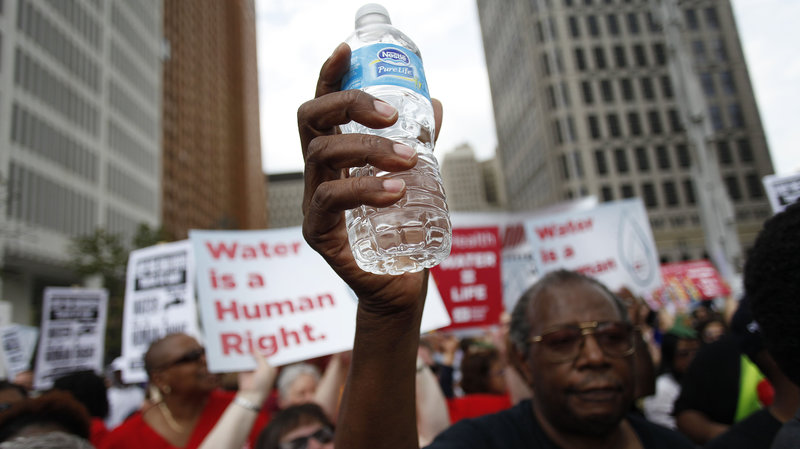
New publication: What is “water privilege”? And how do we perpetuate it in our everyday language, to dismiss the problems of people who lack water access?

When I began work on the Detroit Water Stories project, back in 2017, I was puzzled why more people living in the city and suburbs were not aware of or perturbed by the mass water shutoffs that had already impacted close to 100,000 households, since 2014. This was, after all, an issue that the United Nations had condemned in no uncertain terms as a major violation of human rights, after the Detroit Water and Sewerage Department started disconnecting water for residents who could not pay their bills — and in the richest country of the world, no less!

Continue reading “New publication: What is “water privilege”? And how do we perpetuate it in our everyday language, to dismiss the problems of people who lack water access?”

“Appreciation” seems an inadequate word for thanking Grad Student Labor

We are still in the thick of the COVID-19 crisis, and my university has declared this week to be Graduate Student Appreciation Week. I think this is a wonderful move, both for graduate students and faculty, because it helps anchor us to each other and reminds us of how much we really, crucially depend on each other, especially in a R-1 setting. I think this is a wonderful move, not just because it foregrounds the social connections that remain crucial despite the physical distancing measures presently in place, but also because it emphasizes that this dependence is not just the resource-based variety (as in, “I need you to collect data for me,” or “I need you to write a letter of recommendation for me”) but involves emotional investment and labor from all parties — perhaps too much of it, at times. At the same time, this recognition invites further introspection about the lived experiences and conditions of our graduate students, challenging faculty to think beyond the staid (and quite possibly rose-tinted) nostalgia of “in the days when I was a grad student…” to listen to and act in response to their concerns. Whether this is about grad student stipends, housing, diversity and inclusion within the department, bureaucratic red rape, bullying, … the list goes on (sadly).

Continue reading ““Appreciation” seems an inadequate word for thanking Grad Student Labor”

Charting new “Movements in Organizational Communication Research”: My first book is out in print!

Movements cover

I’m so proud and excited that this labor of love from my awesome colleague (and friend) Jamie McDonald and I is finally out in PRINT! “Movements in Organizational Communication” is available for purchase through its publisher (Routledge) website HERE.

This book is the culmination of our vision for a volume that tackled state-of-the-art organizational communication research and related them to everyday events, in a way that felt more accessible for students. In short, something that made organizational communication seem personal and relevant! Personally, I owe a huge debt of gratitude to my amazing undergraduate and graduate students at Wayne State University and Purdue University, where I have taught classes on organizational communication, leadership, small group communication, professional issues, and communication technologies. Their questions and experiences helped stimulate the process for thinking about, designing, and creating this volume!

Continue reading “Charting new “Movements in Organizational Communication Research”: My first book is out in print!”

Here’s my Twitter Thread on #WaterSecurity Organizing and Policy

I read this news article in The Atlantic this morning noting how Florida Governor Rob DeSantis, who does not have the best record on environmental action and climate change policy, has unveiled a new set of measures to protect the state’s water sources. The article goes on to argue that water is the “one” issue that even traditionally climate action-averse Republican governors cannot avoid. That prompted me to reflect on what is rhetorically distinctive about water insecurity that prompts widespread action. Here are my musings…

Continue reading “Here’s my Twitter Thread on #WaterSecurity Organizing and Policy”

Presenting research on Graduate Students’ Resilience and Stress Management at ICA 2019

The RISE Lab is thrilled to have our paper accepted for presentation at the 69th annual conference of the International Communication Association! The paper, titled Structurational Resilience in Graduate School: How Communication Graduate Students Manage Stress, was coauthored with Wayne State graduate students Kelsey Husnick, Alexei Berg and Caleb Mims, and University of South Florida professor Patrice M. Buzzanell.

Continue reading “Presenting research on Graduate Students’ Resilience and Stress Management at ICA 2019”

Learnshop on Tensions Model to Negotiate with Environmental Stakeholders at GLBD 2018 Conference

I was privileged to facilitate a “Learn shop” at the 14th annual conference of the Great Lakes Bioneers Detroit, targeted primarily at regional leaders working toward environmental sustainability. My own contribution centered on helping learnshop participants use communication theory to engage multiple stakeholders amid the “wicked problems” of environmental sustainability. Drawing from my research, I proposed a Tensions Model centered on recognizing how tensions can be more than just headaches, but can be used constructively once we take the time to appreciate the situation holistically from multiple perspectives. Specifically, the learnshop used four “tension areas” as the starting point to help analyze different problems in small groups.

Continue reading “Learnshop on Tensions Model to Negotiate with Environmental Stakeholders at GLBD 2018 Conference”